
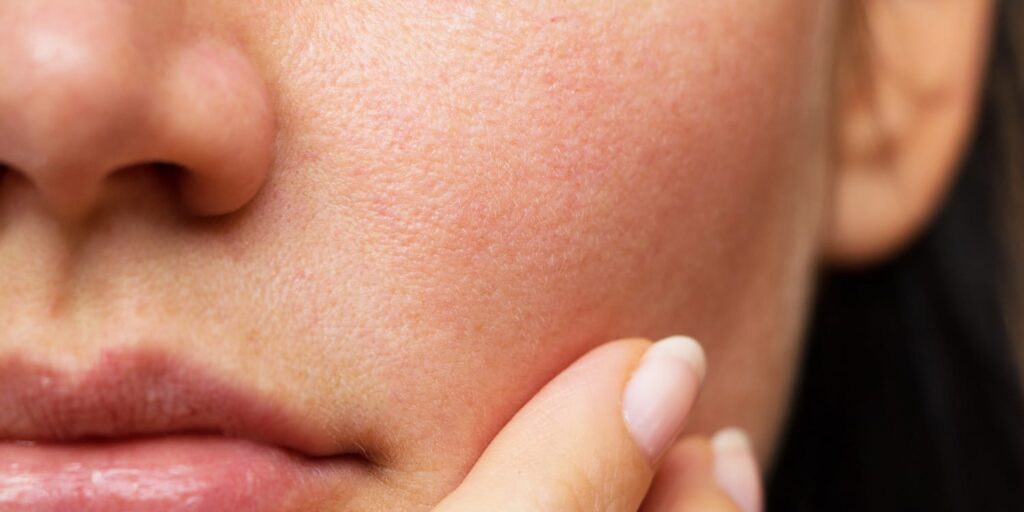
Overview of skin
The skin, the body’s largest organ, serves multiple crucial functions :
- Protection: Shields against germs, infections, and environmental elements.
- Regulation: Maintains body temperature.
- Sensation: Enables tactile experiences through nerves.
Anatomy of skin
Layers of the Skin
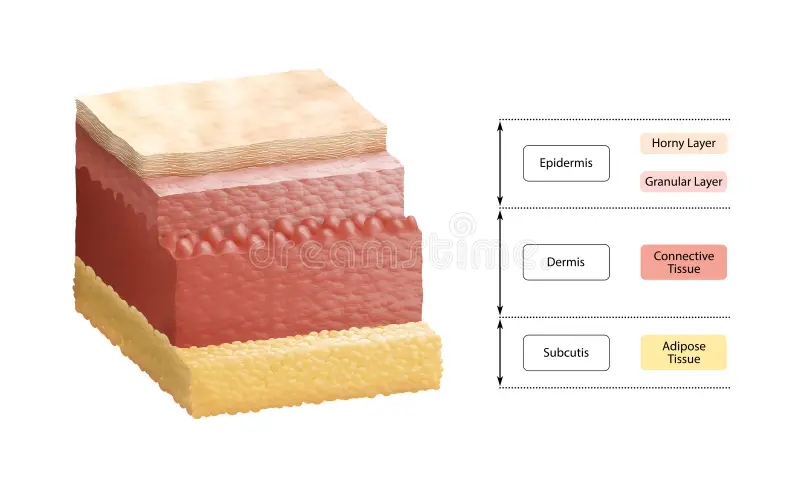
1. Epidermis (Top Layer)
- Composition: Made of keratin, a protein that forms skin cells.
- Functions:
- Protective Barrier: Keeps bacteria and germs out.
- Regenerates: Produces new skin cells, replacing about 40,000 old cells daily.
- Immune Defense: Contains Langerhans cells that fight off germs.
- Pigmentation: Contains melanin, determining skin, hair, and eye color.
2. Dermis (Middle Layer)
- Composition: Contains collagen and elastin.
- Functions:
- Strength and Flexibility: Collagen and elastin maintain skin’s structure and elasticity.
- Hair Growth: Roots of hair follicles are located here.
- Sensation: Nerves detect temperature, texture, and pain.
- Oil Production: Oil glands keep skin soft and water-resistant.
- Sweat Production: Sweat glands regulate body temperature.
- Nutrient Supply: Blood vessels nourish the skin.
3. Hypodermis (Bottom Layer)
- Composition: Fatty tissue.
- Functions:
- Cushioning: Protects muscles and bones.
- Connection: Links skin to muscles and bones.
- Support: Nerves and blood vessels expand in this layer.
- Temperature Regulation: Fat insulates the body.
Additional Skin Components
- Skin Cells: 19 million cells per inch.
- Melanocytes: 60,000 cells making melanin per inch.
- Nerve Endings: 1,000 per inch.
- Blood Vessels: 20 per inch.
Conditions and Disorders
Skin can be affected by various issues, including :
- Allergies: Contact dermatitis, poison ivy rashes.
- Blisters and Bug Bites: Spider, tick, mosquito bites.
- Skin Cancer: Including melanoma.
- Infections: Cellulitis.
- Rashes and Dry Skin.
- Disorders: Acne, eczema, psoriasis, vitiligo.
- Lesions: Moles, freckles, skin tags.
- Wounds and Burns: Including sunburns.
- Scars.
Tips for Healthier Skin
- Sunscreen: Use SPF 30+ daily, even indoors.
- Avoid Tanning: Prevents skin damage and cancer.
- Manage Stress: Reduces flare-ups of skin conditions.
- Regular Checks: Monitor skin and moles for changes.
- Quit Smoking: Prevents faster aging of the skin.
- Gentle Cleansing: Wash face twice daily.
- Moisturize: Keeps skin hydrated and healthy.
Additional Common Questions
When to Consult a Doctor
- Mole Changes: Size, color, shape, or symmetry alterations.
- New Moles: Any new growths.
- Unhealable Cuts: Cuts needing stitches.
- Severe Burns: Especially if blistering.
- Infections: Signs like red streaks or yellow discharge.
- Unexplained Rashes: Persistent or severe skin conditions.
Conclusion
The skin is essential for protection, regulation, and sensation. It is prone to various issues, from minor rashes to serious conditions like skin cancer.